
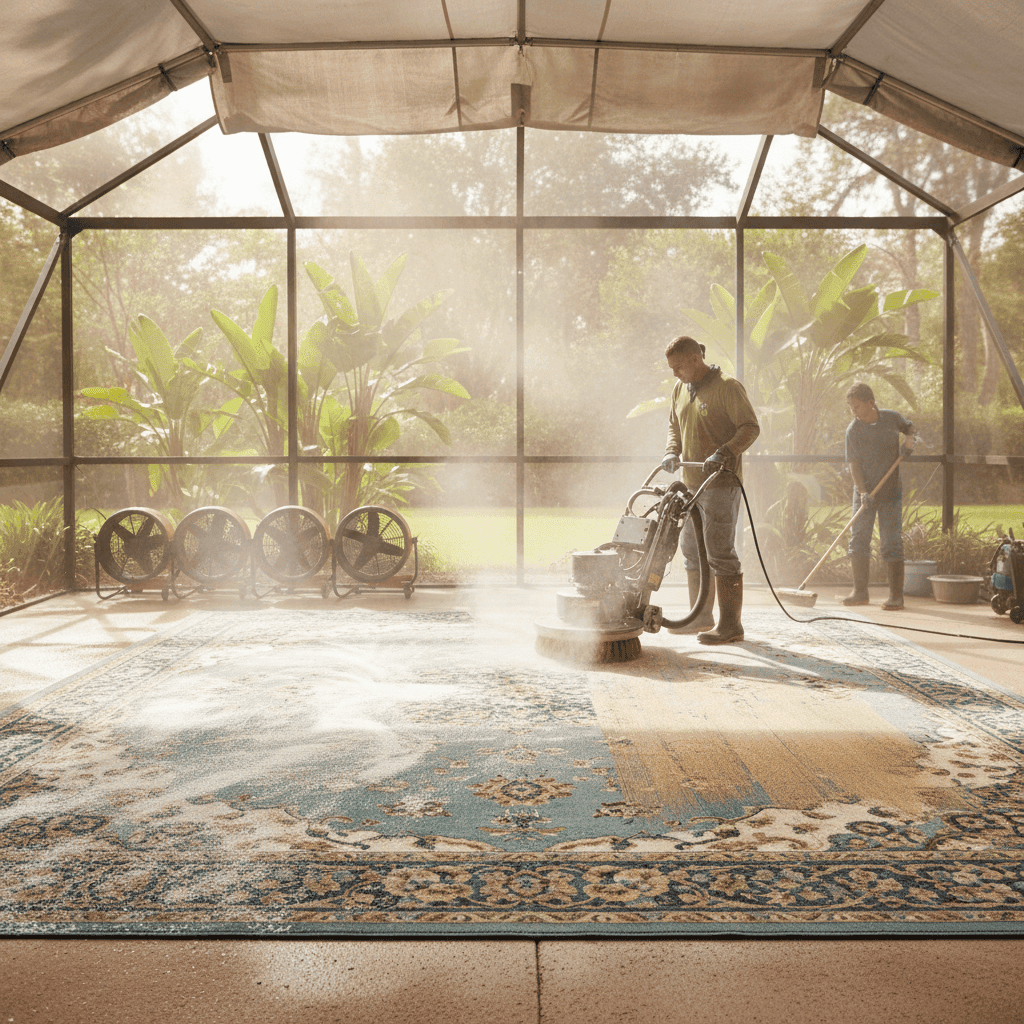
Humidity changes how carpet fibers react to water. In warm, humid regions carpets take longer to dry, which raises the odds of lingering moisture, mildew and odor. Homeowners and property managers need cleaning plans that remove soils while cutting drying time and limiting moisture trapped in padding and subflooring.
This article explains practical carpet cleaning methods for humid climates. You will find the pros and cons of each technique, real world tips to speed drying, and equipment choices that reduce risk of mold and recurring stains. If you live in a place with high humidity and frequent storms this guidance will help you choose a method that fits your schedule and your indoor environment.
How humidity changes carpet cleaning priorities
High relative humidity means air holds more moisture. When carpets stay wet longer the temperature at the carpet surface drops less, so evaporation slows. Slow drying gives bacteria and mold a chance to grow, and stains set deeper when soils remain damp for hours. That means the priority is not only removing visible dirt but also minimizing time that fibers remain wet.
Another factor is indoor climate control. A building without reliable air conditioning or a dehumidifier will trap moisture. In such settings a cleaning method that leaves minimal residual moisture is smarter. For many local references and regional advice for Orlando humidity readers can check this resource https://freedomcleaningsolutions.com/what-carpet-cleaning-method-works-best-in-orlandos-humidity/ which discusses methods tailored to humid environments.
Hot water extraction with accelerated drying techniques
Hot water extraction is a well known method that uses pressurized hot water and extraction to rinse soils. In humid climates the key is pairing this method with active drying steps. Done correctly it removes deep soil and allergens while leaving little residue.
How to speed drying after extraction
- Run high volume air movers aimed at the carpet surface to increase evaporation rate.
- Use a dehumidifier at the same time to lower indoor relative humidity so air can accept more evaporated moisture.
- Open interior doors to create cross flow of conditioned air. Avoid opening windows when outdoor humidity is higher than indoor levels.
When hot water extraction works best
This method is ideal for deep cleaning of residential and commercial carpets with heavy traffic. For humid climates choose technicians who bring truck mounted extractors or high powered portable machines and who include drying equipment in the job. If the crew does not plan for drying, request blowers and a dehumidifier so that the drying window is cut to under 12 to 24 hours.
Low moisture and dry compound methods for quick drying
Low moisture methods use granular detergents or minimal water and rapid mechanical agitation. They do not penetrate as deeply as extraction, but they are attractive in humid climates because they dry in minutes to an hour.
Types of low moisture techniques
- Dry compound cleaning where a cleaning powder binds soils and is vacuumed up.
- Encapsulation products that crystallize soils and leave a dry film that can be vacuumed.
- Bonnet cleaning which uses a rotating pad and a small amount of solution to clean surface soiling.
These methods are useful for regular maintenance where deep soil is not present. They reduce the chance of microbial growth because carpets are dry quickly. Avoid relying on them for carpets with heavy embedment or pet stains because they may not remove all residues that feed odors.
Addressing mold and mildew risk from padding and subfloors
One of the biggest hazards in humid climates is moisture trapped below the carpet face. Even if the surface dries, padding and subfloors can hold moisture for days. That creates a prime environment for mold. Cleaning plans should include inspection and actions that reduce retained moisture.
Practical steps to protect padding and subfloor
- Lift baseboards or use moisture probes to check padding and subfloor moisture levels when staining was heavy.
- If padding is wet or smells musty remove and replace it. Reinstalling saturated padding almost guarantees future odor and mold.
- For spills, extract from the surface and then lift the wet area with targeted air movers from below when possible to dry the entire assembly.
Spot treatment and stain removal when humidity complicates results
Spot cleaning requires different timing in humid spaces. A treated spot that remains damp will attract dirt until it dries. That means after removing a stain you must remove as much liquid as possible and then promote drying.
- Use absorbent towels and a wet vacuum to remove cleaning solution and stain fluid.
- Apply stain removers in small amounts and rinse thoroughly with extraction to avoid residue that invites re soiling.
- Finish with air movers and local dehumidification to dry the treated area.
For organic stains such as pet accidents or food spills follow with a microbial neutralizer where needed. If odor persists consider a second treatment and more intensive drying because smell often indicates residual moisture and organic matter in the backing or padding.
Equipment choices that matter in humid regions
Choosing the right gear reduces drying time and improves outcomes. Look for rental or service companies that bring air movers, axial fans, and refrigerant or desiccant dehumidifiers. Truck mounted extractors tend to have higher extraction force which removes more water than small portable units.
- High extraction vacuum power measured in cubic feet per minute increases water removal.
- Commercial dehumidifiers lower the room relative humidity and can be dialed to maintain a target level.
- Specialty drying systems that include heaters plus dehumidification speed drying but use them carefully to avoid overheating natural fibers.
Routine maintenance and scheduling for humid seasons
Maintenance frequency and timing matter more in humid climates. Frequent light cleanings keep soils from becoming embedded and reduce moisture load when carpets are shampooed or extracted. Schedule deep cleaning for days when you can run air conditioning and dehumidification for the recommended drying window.
- Plan deep cleanings during dryer months when possible or on days with lower outdoor humidity.
- For apartments or properties without strong HVAC include drying equipment in the service order and block off rooms for the required drying time.
- Encourage quick reporting of spills so that rapid response prevents soaked padding or set stains.
Cost and environmental considerations for humid climate choices
Low moisture methods often cost less per visit and use less energy for evaporation. Hot water extraction removes more soil and allergens but will require additional equipment and possibly longer service windows to protect against mold. Factor in the cost of rentals or professional setup for dehumidifiers when comparing options.
Environmentally, using less water and biodegradable cleaning solutions reduces runoff and waste. When hot water extraction is necessary choose detergents that rinse clean and avoid leaving residues that can trap moisture and attract soils.
Finally think about the life cycle of the carpet. Frequent wet cleaning that leaves padding wet can shorten carpet life by promoting odor and backing breakdown. Regular surface maintenance with low moisture methods, combined with occasional deep extraction scheduled during controlled indoor conditions, often gives the best balance between cleanliness and longevity.
Conclusion that summarizes and invites action
In humid climates the best carpet care balances powerful soil removal with strategies to reduce drying time. Hot water extraction removes deep dirt but requires active drying and dehumidification to prevent microbial growth. Low moisture and dry compound approaches are useful for routine maintenance because they cut drying to minutes and lower the chance of odor. Protect padding and subfloor by inspecting for retained moisture and replacing saturated materials when necessary. Choose service providers who include drying equipment or offer a coordinated plan so that a deep clean does not become a long term moisture problem. If you want help deciding which method fits your home or business request an assessment, ask about drying plans and scheduled maintenance, and insist on a firm drying window. Taking these steps will reduce risk, keep carpets looking better longer, and limit the need for repeated treatments. Contact a local professional or schedule a consultation to set up a cleaning plan that matches your property and climate conditions.